
Capture enough detail to act
A short complaint becomes useful when it identifies the room, the problem and what the resident has observed. Ask for specific information rather than a vague “not working” message. Urgent safety issues still need your property’s immediate escalation procedure.
- Identify the relevant room and resident.
- Describe the fault and when it occurs.
- Use the property’s emergency contact process for immediate danger.
Keep the handover visible
When different staff members work across shifts, a record of the request is more useful than a verbal handover alone. Review the current status before contacting the tenant, record the follow-up and check that the issue has actually been resolved.
- Review existing requests before opening a duplicate.
- Keep staff follow-up in the relevant record.
- Check the resolution with the resident where appropriate.
Evaluate the whole request journey
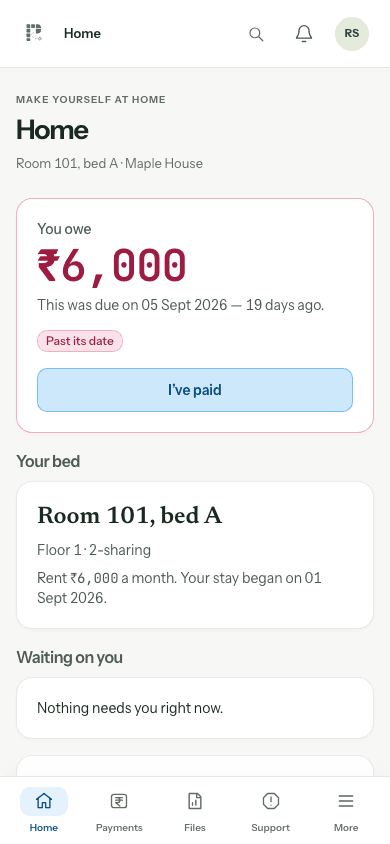
In a demo, start from a tenant login, raise a fictional request and inspect the staff view. Ask how the property wants to distinguish routine work from urgent issues and which staff should have permission to update the record.
- Test a new request and a follow-up.
- Check how residents see progress.
- Include maintenance responsibility in staff onboarding.
Questions, answered
Can tenants raise complaints themselves?
Yes. A tenant with access can raise maintenance requests from their own login.
Does PGonTrack replace emergency reporting?
No. Maintain clear emergency phone numbers and on-site procedures for urgent safety incidents.
Can maintenance be evaluated before purchase?
Yes. Ask Narvyn to show the tenant-to-staff request workflow in a guided demo.